Why High-Density AI Data Centers Require Liquid Cooling
As artificial intelligence (AI) and high-performance computing (HPC) accelerate, data centers are moving beyond the physical limits of air cooling. Modern rack densities have surged from a traditional 5–10 kW to over 100 kW, with specialized AI clusters now pushing 200 kW per rack. With individual GPU TDPs approaching 1,200 W per chip, the thermal management challenge has moved directly into the server chassis.
Technologies like direct-to-chip (DTC) cooling and rear-door heat exchangers (RDHx) require a level of hydronic precision that legacy HVAC systems cannot provide. In these high-flux environments, system reliability is determined by valve authority and flow stability. Bray provides the mission-critical valve infrastructure needed to manage these complex liquid loops, ensuring consistent thermal regulation from the primary plant down to the silicon.
Why Liquid Cooling Is Mandatory for AI Data Centers
Air cooling struggles to scale with AI workloads due to:
- Low volumetric heat capacity
- Rapidly increasing fan energy consumption
- Poor heat capture at the chip level
Liquid cooling overcomes these limitations by using water or dielectric fluids with significantly higher thermal conductivity. This enables:
- Direct heat removal at cold plates, RDHx units, or immersion systems
- Support for ultra-high rack densities (60 kW–200 kW+)
- Lower power usage effectiveness (PUE) through reduced transport energy
As a result, cooling has become a precision hydronic challenge, where stable flow control is essential to manage rapidly fluctuating compute loads.
Engineered Flow Control for Reliable ΔT Management
Modern liquid cooling systems rely on maintaining a strict design ΔT (temperature differential). Poor valve authority or unstable flow can lead to low ΔT syndrome, excessive pumping energy, and reduced heat exchanger efficiency.
Bray valves are engineered to integrate across the full cooling hierarchy:
- Primary loops: Central chilled water, condensing water, and dry cooler circuits
- Secondary loops: CDUs, heat exchangers, rack manifolds, and cold plate distribution
High rangeability, low hysteresis, and predictable control response allow Bray valves to protect both IT hardware and facility operating budgets.
Bray Valve Solutions for Critical Cooling Applications
Pressure Independent Control Valves (PICVs)
The Bray Simple Set™ (SS) and Simple Set Max™ (SSM) series are designed for dynamic liquid cooling environments, maintaining constant flow regardless of system pressure fluctuations.
Applications:
- Secondary CDU loop regulation
- RDHx branch balancing
- Rack manifold-level flow distribution
Key advantages:
- Prevent overflow at cold plates and heat exchangers
- Simplify commissioning with preset flow limits
- Maintain valve authority at part-load conditions
Characterized Control Ball Valves
For applications requiring high-resolution throttling, Bray’s characterized ball valves provide an equal-percentage flow characteristic.
Best suited for:
- CRAH and AHU units
- CDUs and heat exchangers
- Low-flow, high-precision temperature control
Advantages:
- High turndown ratios for precise temperature matching
- Tight shutoff and predictable Cv response
- Optimized for treated water and glycol mixtures
Check Valves
Bray check valves are flow-activated and designed for reliable backflow prevention in redundant pump circuits and CDU loops.
Key benefits:
- Protection: Gravity- and spring-assisted closure minimizes water hammer
- Efficiency: Optimized internals allow full opening at low flow rates
- Compact design: Reduced weight and footprint for high-density skids
Globe Control Valves for Ultra-Precision
When the highest level of control accuracy is required, Bray globe valves deliver superior linear and equal-percentage modulation for sensitive thermal loops.
Butterfly & Ball Valves for Reliable Isolation
Isolation valves are essential for maintenance, redundancy, and concurrent operations.
Bray isolation valves offer:
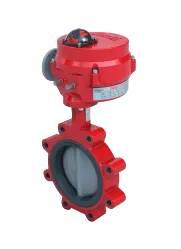
- Bubble-tight shutoff for chillers, cooling towers, heat exchangers, and CDUs
- Compact footprint for skid-mounted equipment
- Multiple end connections (flanged, grooved, welded, quick Clamps and more)
- Dead-end service capability for safe downstream maintenance
Application-Driven Valve Selection
At Bray, valve selection starts with thermal performance—not pipe size.
Key considerations include:
- ΔT optimization: Maximizing heat exchanger efficiency
- Controllability: Sizing based on thermal load (kW), not just pipe diameter
- Material compatibility: Ensuring compliance with ASHRAE TC 9.9 wetted material standards
Best Practices for Liquid Cooling Flow Control
- Deploy PICVs to protect branches from pressure-induced flow variations
- Size valves by thermal load (kW) for proper control authority
- Prioritize high rangeability to handle varying compute loads
- Use isolation valves to enable rapid failover and uninterrupted maintenance
Conclusion
As data centers evolve to support 200 kW+ racks, the margin for error in thermal management disappears. Precision hydronic control is no longer optional—it is foundational to uptime.
Bray provides a comprehensive suite of PICVs, characterized control valves, and robust isolation solutions to keep the world’s most powerful chips running cool. From the central plant to the cold plate, Bray is your partner in scalable, high-efficiency liquid cooling.
SOLUTION FOR THE DATA CENTER
Bray Commercial works with building engineers and architects to keep data cool in data centers across North America.
Frequently Asked Questions (FAQs)
What valves are used in liquid-cooled data centers?
PICVs, characterized control valves, globe valves, check valves, and isolation valves are used to regulate flow, maintain ΔT, and ensure system reliability.
Why are PICVs important in AI data centers?
Where are valves used in direct-to-chip cooling?
Valves are installed in CDUs, secondary loops, rack manifolds, cold plate distribution lines, and RDHx branches to control coolant flow.
What is ASHRAE TC 9.9?
It is the technical committee of ASHRAE responsible for thermal guidelines for data processing environments.
What is immersion cooling?
Immersion cooling is a method where servers or electronic components are fully submerged in a dielectric fluid to efficiently dissipate heat.